Latest AI Engineering Articles
-
DeepSeek MLA: 4 Attention Methods Compared
DeepSeek MLA: 4 Attention Methods Compared DeepSeek MLA is the focus of this practical guide to MHA, GQA and MQA because its architecture shows how KV cache compression moves from theory into real LLM inference systems. DeepSeek MLA practical checklist Use this quick checklist when deciding whether DeepSeek MLA is the right mental model for…
-
Multi-Head Latent Attention (MLA) Explained: DeepSeek Architecture, KV Cache, Math & PyTorch Code
Multi-Head Latent Attention (MLA): How DeepSeek Reduces the KV Cache Run a transformer with a short prompt and the attention mechanism may not look particularly problematic. Increase the context to tens of thousands of tokens, serve several users simultaneously, and generate tokens autoregressively, however, and a different bottleneck appears: the KV cache. Traditional Multi-Head Attention…
-
Google OKF is a Knowledge Layer for AI Agents
I have recently been evaluating Google’s Open Knowledge Format (OKF). My initial assessment is that the framework is intentionally minimalist. Author: Ravi KiranAuthor profile: Ravi Kiran writes practical AI engineering guides for GenAITrail, focusing on AI agents, RAG, MCP, developer tooling, and applied AI architecture.Sources and method: This guide synthesizes the published Open Knowledge Format…
-
RAG Chunking Strategies Tested: Fixed vs Recursive vs Semantic Chunking
RAG Chunking Strategies decide what your retriever is allowed to find. If a useful answer is split across two chunks, buried inside a large mixed-topic chunk, or detached from the heading that gives it meaning, a better prompt will not repair the damage. The failure happened before the model saw the question. Choosing the right…
-
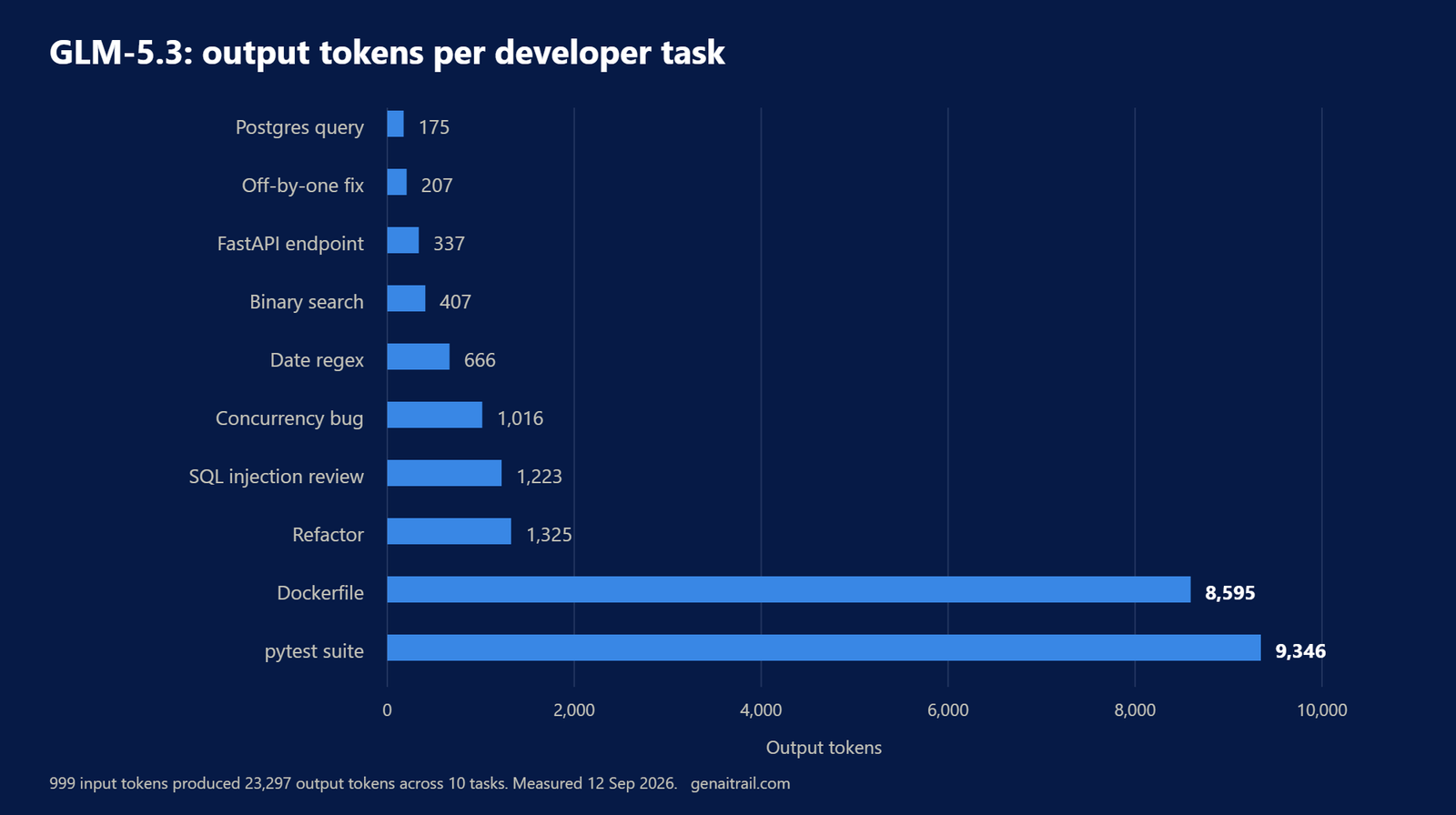
GLM-5.3 Architecture and API Setup: A Python Walkthrough
By Ravi Kiran · Editorial scope updated 19 October 2026. This article covers architecture and API setup. Cost comparisons and test observations are maintained in the linked companion analysis. GLM-5.3 arrives at a moment when the AI model race is no longer only about who can generate the most convincing paragraph or answer a difficult…
-
GLM-5.3 Cost Analysis: Calculator, Token Usage and Workload Trade-offs

By Ravi Kiran · Editorial scope updated 19 October 2026. This analysis focuses on cost per completed task: token rates, cache usage, output length, retries and the limits of benchmark comparisons. Use the calculator to explore a workload, then compare the estimate with actual billed usage. For architecture, provider configuration and a Python API example,…
-
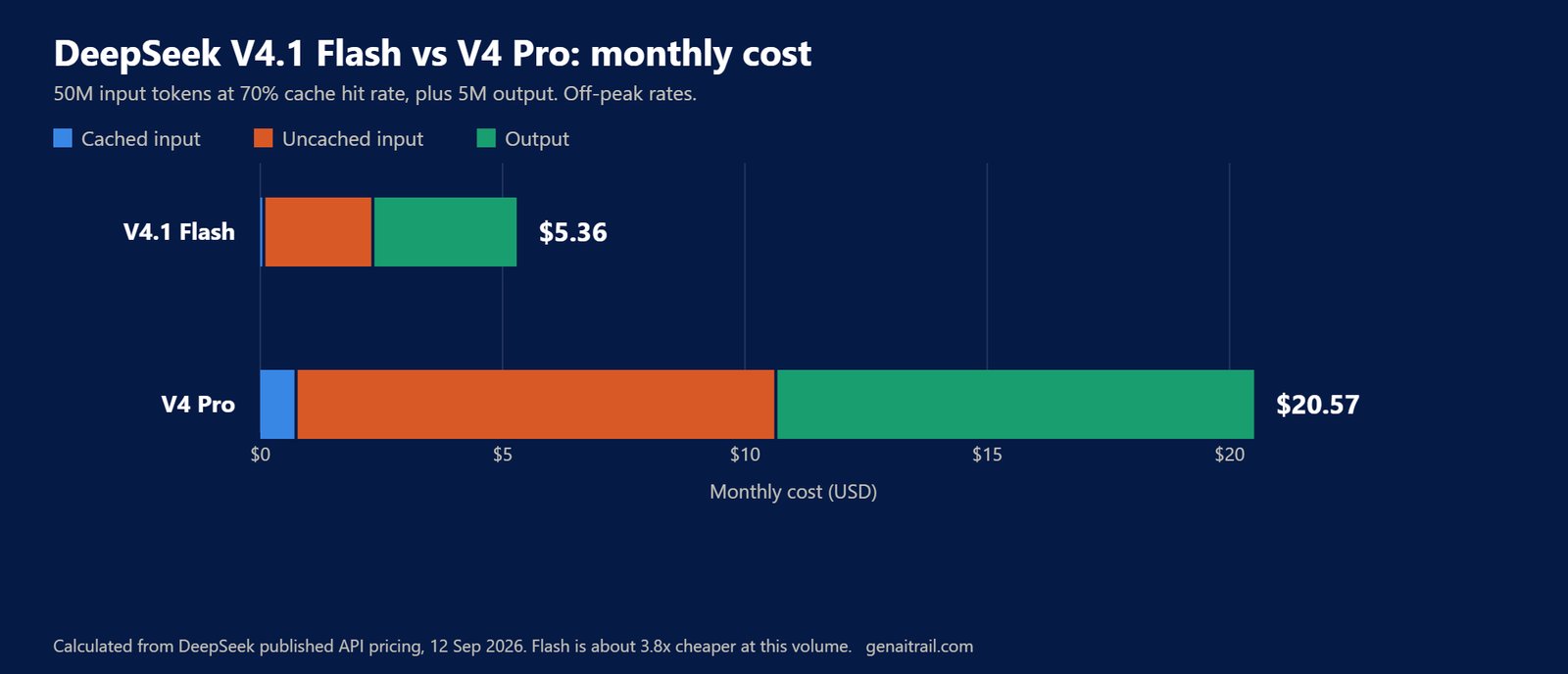
DeepSeek V4.1 Flash: What It Costs and When to Use It

DeepSeek V4.1 Flash was released on 10 September 2026. The short version: it is a 552-billion-parameter mixture-of-experts model with native vision, a one-million-token context window, MIT-licensed weights, and pricing low enough to change what is economically sensible to build. This guide sticks to figures published by DeepSeek in its API documentation and model card. Where…
-
How to Cut LLM API Costs by 80%: Caching, Routing and Context Budgets
Most teams discover their inference bill the way you discover a leak: through the invoice. A prototype that costs a fraction of a cent per call feels free, right up to the point where it is running a hundred thousand times a day and someone in finance wants a word. The good news is that…
-
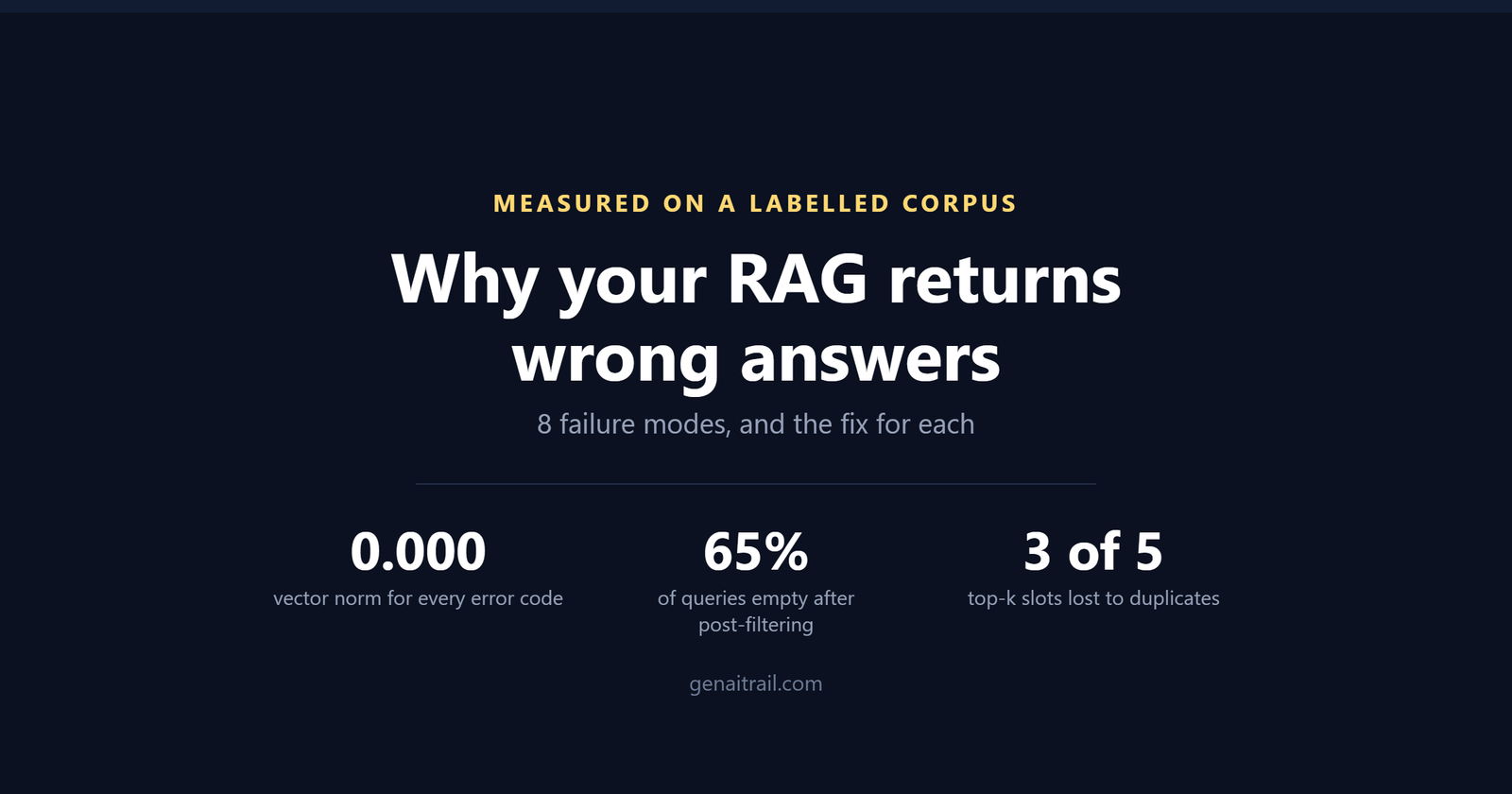
Why Your RAG Returns Wrong Answers: 8 Failure Modes, Measured

A labelled 28-document corpus and 20 queries, measured. Post-filtering returned zero results for 65% of queries, error codes embedded to a 0.000 vector norm, and an unanswerable query outscored every legitimate one. With the full code.
-
LLM System Design Interview: 15 Questions, Answers & a Framework That Works (2026)
There is a specific way people fail this interview, and it has almost nothing to do with how much they know about machine learning. The interviewer says: “Design a customer support assistant powered by an LLM.” The candidate draws a box labelled LLM, connects it to a database, and then spends thirty minutes explaining what…