Latest AI Engineering Articles
-
Claude Opus 5.5 vs GPT-6 Astra: 7 Powerful Comparisons
Updated September 23, 2026 Claude Opus 5.5 arrived on September 22, 2026, and Anthropic is making an unusually aggressive claim for the new model: better performance than Opus 5 on demanding coding and knowledge-work tasks while costing less to run. That immediately raises the comparison developers actually care about in September 2026: Claude Opus 5.5…
-
nanoMoE: Implementing Mixture-of-Experts LLMs from Scratch in PyTorch
Table of Contents Conclusion FAQs Primary MoE References Introduction Research on large language models (LLMs) has advanced at an extraordinary pace over the past several years. Yet, despite the rapid evolution of the field, the core architecture underlying most LLMs—the decoder-only Transformer—has remained remarkably consistent. More recently, however, a different architectural paradigm has begun to…
-
LLM as a Judge: Langfuse Setup, Best Practices & MT-Bench Lessons
LLM as a judge is one of the most practical ways to evaluate open-ended AI outputs when exact-match tests are too narrow. This guide shows how to build, test, and trust an LLM as a judge workflow with Langfuse, MT-Bench lessons, bias checks, and production-ready rubrics. LLM as a Judge: 9 Powerful Practices for Reliable…
-
DeepSeek MLA: 4 Attention Methods Compared
DeepSeek MLA: 4 Attention Methods Compared DeepSeek MLA is the focus of this practical guide to MHA, GQA and MQA because its architecture shows how KV cache compression moves from theory into real LLM inference systems. DeepSeek MLA practical checklist Use this quick checklist when deciding whether DeepSeek MLA is the right mental model for…
-
Multi-Head Latent Attention (MLA) Explained: DeepSeek Architecture, KV Cache, Math & PyTorch Code
Multi-Head Latent Attention (MLA): How DeepSeek Reduces the KV Cache Run a transformer with a short prompt and the attention mechanism may not look particularly problematic. Increase the context to tens of thousands of tokens, serve several users simultaneously, and generate tokens autoregressively, however, and a different bottleneck appears: the KV cache. Traditional Multi-Head Attention…
-
Google OKF is a Knowledge Layer for AI Agents
I have recently been evaluating Google’s Open Knowledge Format (OKF). My initial assessment is that the framework is intentionally minimalist. Author: Ravi KiranAuthor profile: Ravi Kiran writes practical AI engineering guides for GenAITrail, with a focus on AI agents, RAG, MCP, local LLM workflows, developer tooling, and applied enterprise AI architecture.Author expertise: Ravi’s coverage focuses…
-
RAG Chunking Strategies Tested: Fixed vs Recursive vs Semantic Chunking
RAG Chunking Strategies decide what your retriever is allowed to find. If a useful answer is split across two chunks, buried inside a large mixed-topic chunk, or detached from the heading that gives it meaning, a better prompt will not repair the damage. The failure happened before the model saw the question. Choosing the right…
-
GLM-5.3 Explained: Architecture, Benchmarks, Pricing, API & Hands-On Guide
GLM-5.3 arrives at a moment when the AI model race is no longer only about who can generate the most convincing paragraph or answer a difficult question. The bigger test is whether a model can work through a complicated software project, use tools, reason across many steps, understand a large codebase, and keep going without…
-
GLM-5.3: Real Costs, Benchmarks and When to Use It

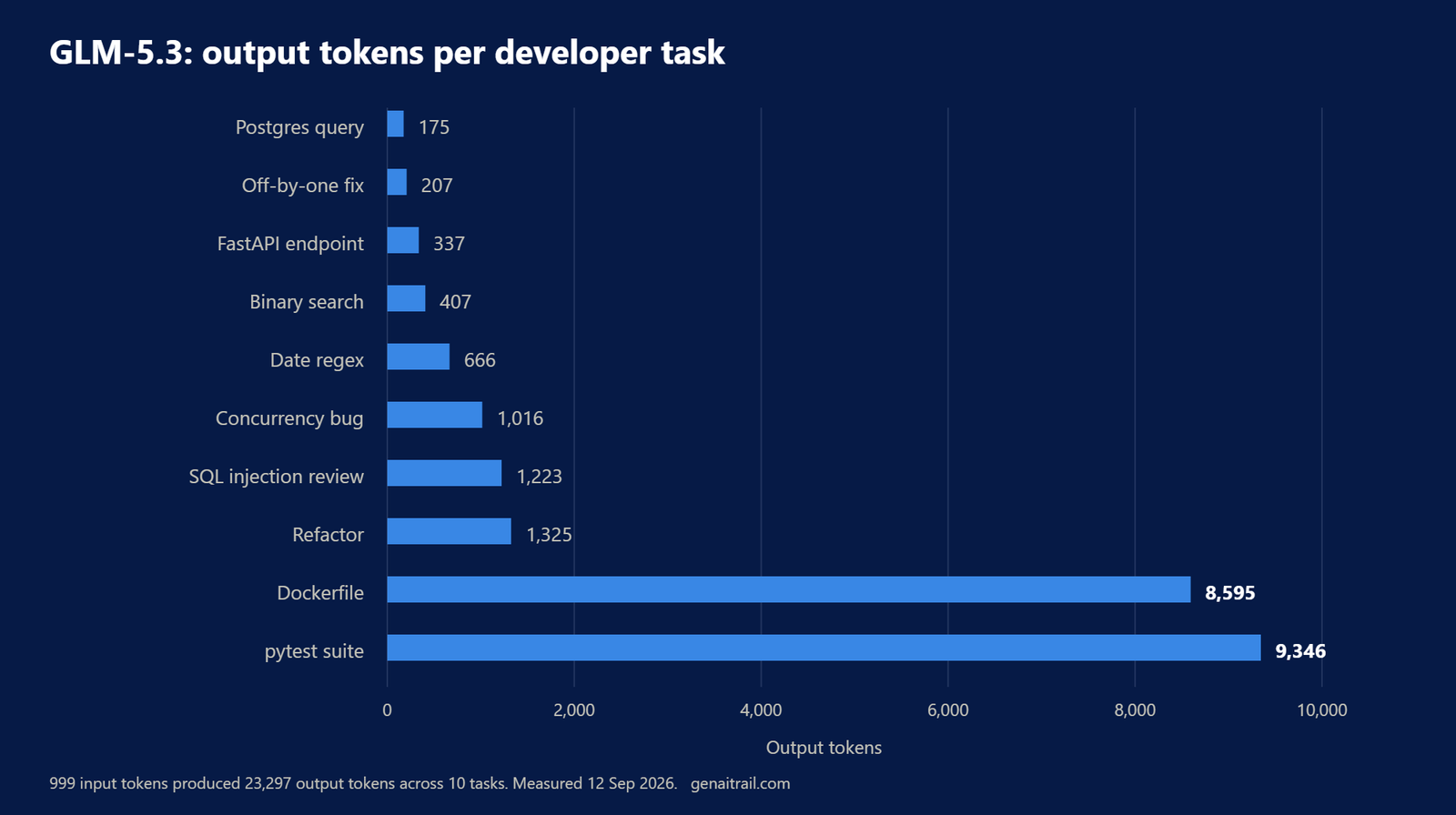
GLM-5.3 is Z.ai’s current flagship: a 753-billion-parameter mixture-of-experts model with a one-million-token context window, priced at $1.40 per million input tokens and $4.40 per million output. It is strong at coding and agentic work, and there are two things about its cost that the rate card does not tell you. Everything below comes from Z.ai’s…
-
DeepSeek V4.1 Flash: What It Costs and When to Use It

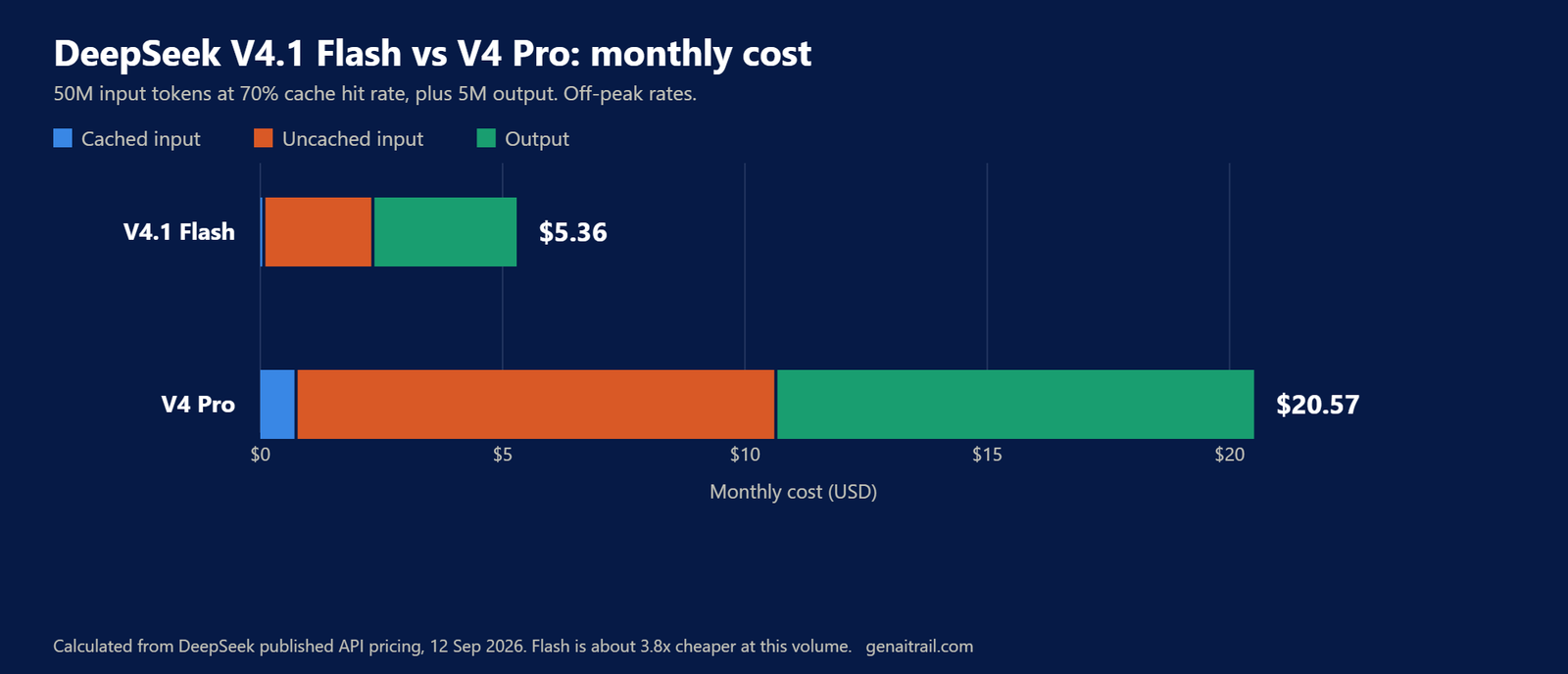
DeepSeek V4.1 Flash was released on 10 September 2026. The short version: it is a 552-billion-parameter mixture-of-experts model with native vision, a one-million-token context window, MIT-licensed weights, and pricing low enough to change what is economically sensible to build. This guide sticks to figures published by DeepSeek in its API documentation and model card. Where…